Friday, 9 May 2025

The man and his mind

A mind all logic is like a knife all blade. It makes the hand bleed that uses it.
Rabindranath Tagore 

He was born on May 7, 1861. However, for his birthday, like Poila Boishakh (Bengali new year) we, Bengalis, refer to our calendar. For, Pochishe Boishakh (25 th day of the first month Boishakh) could fall on May 8 or 9. This year, it fell on May 9, 2025. Here goes something about Rabindranath Tagore that perhaps got lost in the tributes so far.


 His songs and poems are omnipresent through all our Bengali Brahmo festivals, be it Maghotsav (month long celebrations by the Brahmos) in the month of Magh (January according to the Gregorian calendar) to social obligations like marriage ceremonies. From emotional outbursts to seasonal thunderstorms, there is a song for every occasion. His busts, frames, paintings and books were precious wedding gifts in any Bengali wedding. At least one generation in most Bengali household would have bought the entire volume of his works. Even today, his books are given away as part of school prizes, birthdays and at fewer times even at weddings. Gitanjali (song offerings), the book that earned him, the first non- European and the first lyricist, a Nobel prize for literature in 1913, could be bought in attractive pocket sizes at the International Kolkata Book Fair. 


Why is he so endeared in Bengali customs and traditions, you may wonder. Perhaps, no other creative legend could be so much of an influencer like him in this or any other community. I believe, Bengalees, known for their intellectual stimulation, it is the honour for that mind that is present in his compositions and writings. Take his female characters, for instance. Though, they are moored in, but not necessarily helmed by the contemporary fraught and fractured socio-political milieu. 


As it is said, how you treat people is the legacy you leave behind. Even if the characters are fictional, for here too, essentially, the mind of the writer speaks volumes for. 

 
Tagore is an emotion to us. A prolific writer of myriad emotions. During the colonial rule in 1905, he wrote 23 songs in a month protesting against the first partition of Bengal. In fact, his creativity spread across several sectors, be it plays, dance dramas, letters, short stories, novels, poetry and of course songs and in such volumes, prompted octogenarian Satyendranath Banerjee saying, “He is a wonder!” 

 
The best part is as evident from television programmes and housing society festivities yesterday, Tagore inspires generations, be it X, Y, Z or even Alpha, who are as passionate about his works as octogenarian Banerjee is. That is perhaps one reason why recitations feature prominently in our cultural calendar. But of course, his collection of songs, Rabindrasangeet, is still the most popular from his genre across the globe among the Bengalees.

 
I remember in my childhood, on his birthday, we would host cultural programmes and select invitees (closely connected with the participants) would fill up our drawing rooms. For this programme, we would regularly rehearse over some tasty snacks. We had special dresses stitched and stage created for this purpose. Our jewelleries were all made of flowers. Even today, in most programmes based on his works, female dancers wear sarees in a particular style and wear flower-woven jewelleries. Male dancers will put up in decorated kurtas and dhotis. His birthdays were religiously celebrated with staging at least one play/short story and/or dance dramas in our drawing room before our invited guests. We used to garland a chosen frame of his with Tuberose flowers and even kept some of them in the painted brass pots with water. We used to love the soft scent of this flower amiably wafting around.

 
Our celebration was incomplete without the spread of typical Bengali gastronomic bonhomie – a plate of fulko luchhi (puffed deep-fried bread made of flour). Its demand was directly proportional to its fluffyness and the flavour of accompanying curry (baby potatoes in spicy gravy) called chhoto aloor dum. A humble tribute to the legendary Thakurbari and its optical and epicurean delights. 

 
The aroma of food gets a real contest with the scent of Tuberose. It is one flower which I have seen in both happy and sad occasions among Bengalees, be it at a wedding or during funeral rites. Even today, his plays and songs are staged within housing society premises as well as conventional theatres with much fanfare. Rabindra Sadan, the oldest cultural hub in India, built in 1961 to commemorate the contribution of Tagore gets particularly resplendent on this day, reverberating with his creations.

 
 We sang his songs, danced to his tunes, recited his poems even when we were kindergarten girls with ponytails and with little understanding of his expressed thoughts and nuances. Today as I listen to his songs or poems on my smartphone, the words left unsaid, assume a bigger say in empty spaces. Few years back, when veteran actor, Amitabh Bachchan sang, Jodi tor dak shune keu na ashe, tobe ekla cholo re (If no one comes in response to your call, then walk alone!) for a film, everyone gave it a rousing reception. I feel that the song being sung in its original lyrics makes a huge difference and calls for such a standing ovation. I haven’t felt the same while listening to his translated hindi songs. Yes, back to his words and wisdom...   

 
I read this on a social media post: In 1906 as part of a National Council of Education Committee, Rabindranath Tagore set up question papers for seventh and fifth standards. A mere glimpse into some of these questions will reveal the sensitivity of the mind of a legend. “If you made a profit of Rs 100, how will you spend it, write it in a letter to your friend and the other one is write down in a letter to your friend, things that you especially like and dislike in your textbooks.

 
His works often reflect his openness and priority to freedom and individuality of a person. He would rather go against the tide, break rules and start afresh where the mind of a person is held high and free of all fears. Remember, Tasher Desh or the Land of Cards. A satirical play bringing down regimented life.

 
I am literally grown up on a diet of his works. In those days, my primary class used to start with his inimitable book, Shohoj Path. Illustrated in linocuts by the famous Indian artist from Tagore’s Shantiniketan, Nandalal Bose, the book in two parts offers a foundational course on the basics of Bengali language and literature. My school curriculum in higher classes too had a thoughtful spread of his poems and short stories, dance dramas and novels. Last but not the least, as is the custom in those days and to some extent, even now in Kolkata, as a Bengali girl, I was compulsorily taught how to sing Rabindrasangeet. I had a good time though at my aunt’s place who was a well-known singer. Often, my grandmother would keep my favourite savouries which prompted me not ever to miss my class!! Even then, I was quite a Jughead Jones!!

 
Sometime back, as I was scrolling through some of the comments of an audience spanning different continents and nationalities, listening to Rabindrasangeet on my smartphone, I got goosebumps. Many do not understand his mother tongue- Bengali. Several more hails from the young and happening generation. Yet, they all enjoyed listening to his songs again and again. It gives them - peace, happiness, solace and joy. 

Some hope when there is so much distress around. 

164 years and Gurudev, you are only growing stronger in our thoughts, as you keep uplifting our minds.

True hallmark of a writer.

Happy Birthday, Gurudev.

Pronam

Pochishe Boishakh, 1432

 #Gurudev #Shantiniketan #NandalalBose # Rabindrasangeet  #RabindranathTagore  #linocuts


Saturday, 5 April 2025

Don't help, but support!

 I am only one, but I am one. I cannot do everything, but I can do something. And I will not let what I cannot do interfere with what I can do.

Edward Everett Hale


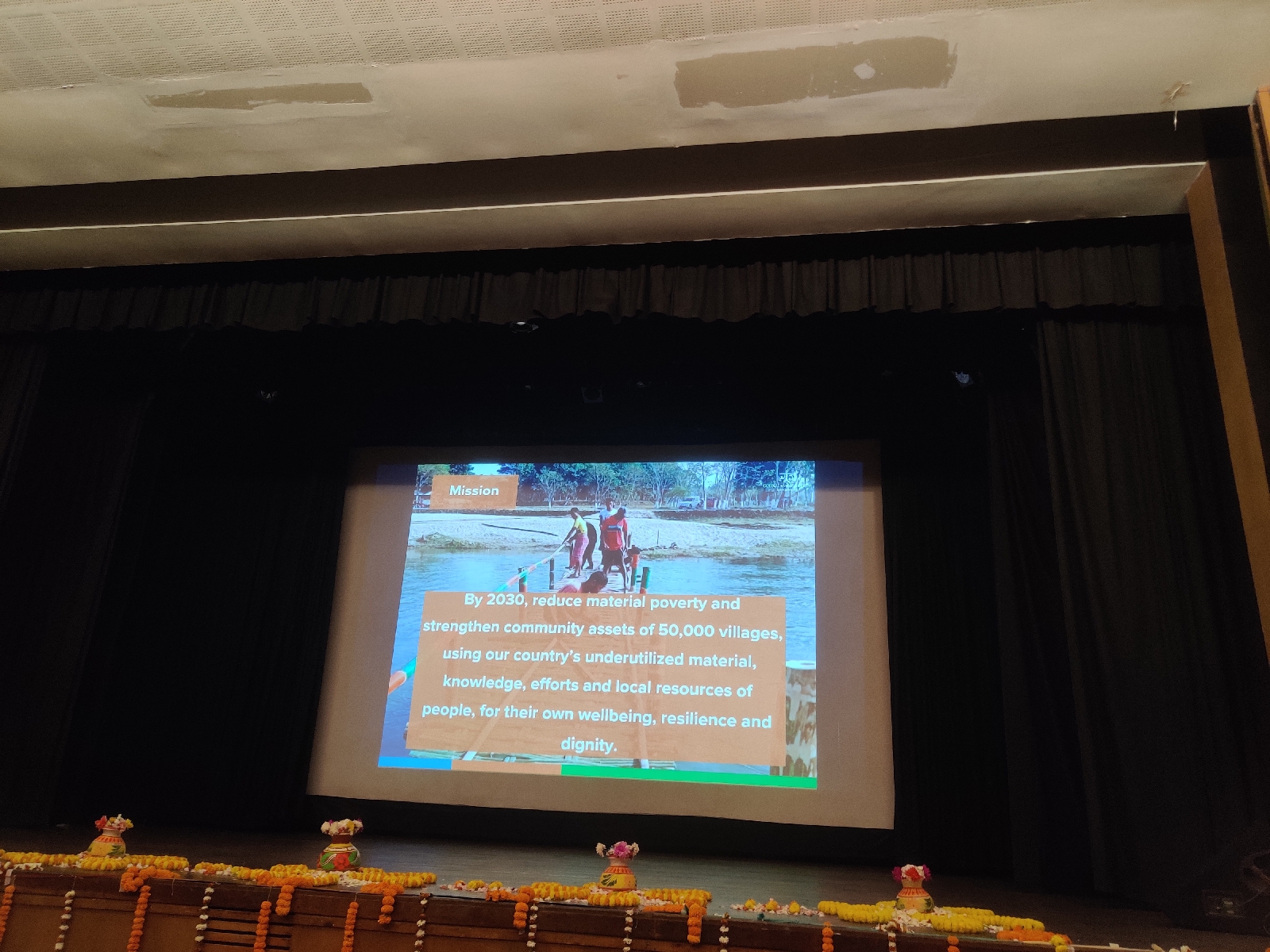
Why a non-governmental organization (NGO) called Goonj would call an annual Chaupal was intriguing. Recently, in Kolkata, I, Sudeshna Chatterjee, attended the event which opened up a Pandora’s Box as it exposes the hollowness of some stakeholders.


 Goonj works across the country as a disaster relief and rural development organization. There is a Harvard Business case study on it. What I personally find uplifting is that it abhor the word ‘donor’. The NGO considers itself as a stakeholder in empowering communities and amplifying the voices of the marginalized. As it rightly points out, there is a difference between help and support.


Here are some reality checks which by its definition are not always palatable. It is 'we' vs 'they' to start with.  


People usually give out what they don’t want. They would not bother to find out what is required. The thought and word, ‘donation’, demeans dignity that everyone is born with. Rather, they could have been a catalyst to any form of developmental work to make an individual, school or community self-sufficient. For example, it could be guidance to become a small scale entrepreneur,  creation of a playground or revival/ management of a waterbody. Large part of India still has good source of water. What is lacking is water management. 


Just like landfills are dumped with garbage, to some, unfortunately, it seems the NGOs are similar equivalents. I learnt stained pads,  torn and unwashed clothes are also ‘donated’. They don’t have any qualms about giving unwashed trousers that don’t have zips or pajamas that don’t have drawstrings.


There were misdirected advertisements pronouncing using cloth during menstruation as unhygienic. But even clothes can be made hygienic for the usage, that they don’t say, instead urging the target audience to buy more expensive branded pads. Goonj, for example makes much cheaper and hygienic cloth pads. It can be bought and given to needy. Or, donate clothes to enable them to make some more.


 Empathy should not be misplaced. For the same sexual abuse, why a culprit of a homosexual victim is sentenced for six months to two years whereas the sentence becomes seven to fourteen years when the victim is heterosexual?


I have come across prominent reports of certain communities not getting rents in his/her chosen place. But where do you see LGBTQ people suffering from similar predicaments?


One transgender spoke of the absence of a neutral washroom. All the lavatories are marked either 'Gents' or 'Ladies'. Hence at public places, he has to resist the urge enough to develop kidney stones!!


Villagers may not always be as educated as their urban counterparts, but they are street smart and the grassroots wisdom often works.


 Also, for women, going by some Goonj female staffers, a village is safer than a city. 


Inspired to join? You don't need to be a MSW (Master in Social Work) to join an NGO. Engineers and MBAs (Master in Business Administration) also work at Goonj. 


How many of us think laterally? For example, now that Covid thankfully is a past, there are many unused oxygen concentrators across hospitals and even at many homes. These could still be much help to people with severe breathing problems. Laundry bags at hotels and car seat covers could also be used for various requirements.


Chaupal etymologically means a space to converse and connect in a rural set-up where the people are essentially male. Happily, I saw a liberalized version of that concept in a city cultural centre at Kolkata where a large number of the audience were women. They were students, volunteers and well-wishers. In fact, Goonj itself has almost 76 percent of women force.  It was a day full of real-life stories, concerns and conversations, projects and possibilities, disaster photographs decoding harsh truths with dry humour, a few counters of Goonj products for sale and a good lunch. 


When the light shifts, things look different. Thank you Goonj, for hosting this platform and challenging our preconceived notions.


#Goonj #Chaupal  #LGBTQ  #Transgender #SudeshnaChatterjee #Covid 

Saturday, 8 March 2025

Breaking Boundaries


 A woman is like a tea bag - you never know how strong she is until she gets in hot water. There is nothing she cannot achieve. She is a celebration of life. She dreams, and she conquers because girls with dreams become women with vision.

Eleanor Roosevelt


                           Sarika Halder


Remember the Billy Ocean song:  When the going gets tough, the tough get going. And if it is with a hearty laugh, the journey becomes heartening. I met such a toughie in the fag end of January, this year, while hiring an Uber cab in Kolkata. From behind the wheel, she gave me a shy smile, trying to anticipate my reaction. I was pleasantly surprised and the next 45 minutes ride was wrapped in conversations that made me feel good for this year’s International Women’s Day pledge for an inclusive, fair and empowered society. 


Meet Sarika Halder, 32, my cabbie that afternoon. She was driving confidently. We spoke mostly when the car was stuck in a traffic jam. She had to live separately from her husband because of her problems with her in-laws. Her husband was not ready to shift with her. She did not insist either. Over two years now, she has been living with her nine-year-old daughter and mother. Earlier, she had been working as a nanny for infants. But she was not a celebrity nanny. Looking for this job every second year with decent salary could be difficult, she thought. So, for a work profile with more openings, she started learning to drive, thanks to her friend who connected her with a non-governmental organization(NGO). For eight consecutive months, she would learn driving during day time and work as a nanny at night.


With the hard work she had invested, she passed her driving test as well as saved some money. Along with a bank loan, she bought base model of a Wagon R, costing Rs 5.9 lakhs. She knew the risk of taking a loan, but she was determined to draw a better curve for herself and her dependents. She is required to pay Rs 10,000 per month for four years to repay her loan. She is so fiercely independent that she is paying back her husband in instalments, a sum of Rs 2000 that she took as a loan from him. In some time, she plans to learn driving tempo and bus. She also aims to complete her matriculation. She has studied till class VIII. 


She has been driving since the last six months. She takes a hearty breakfast in the morning and drives the whole day till 11 pm at night, almost on empty stomach. Just a cup of tea and biscuits and that too only twice a day. She avoids eating from outside. When asked about her experience, "no untoward incident. Not even, when the passenger in the front seat is a male”, she had said. She was all praise for Uber, police, male cabbies and passengers in that order. Because, while some passengers are nice, some are not so nice. Few are plain rude. They would either disconnect when she replied to a booking call or cancel the ride when they discovered her behind the wheel. But she was dismissive about such irreverent attitude.


Ditto with a meter reader who visited my premise yesterday. Since she did not want to be identified, I will go by her pet name, Pratima K. Mine comes under the ambit of Calcutta Electric Supply Corporation or CESC. When I asked her about her experience, she was candid. "Nothing negative to cry over. Yes, few residents were condescending. They were rather shocked to see me when I rang the bell for the first time, doubting my capability". But like Halder, she was nonchalant.


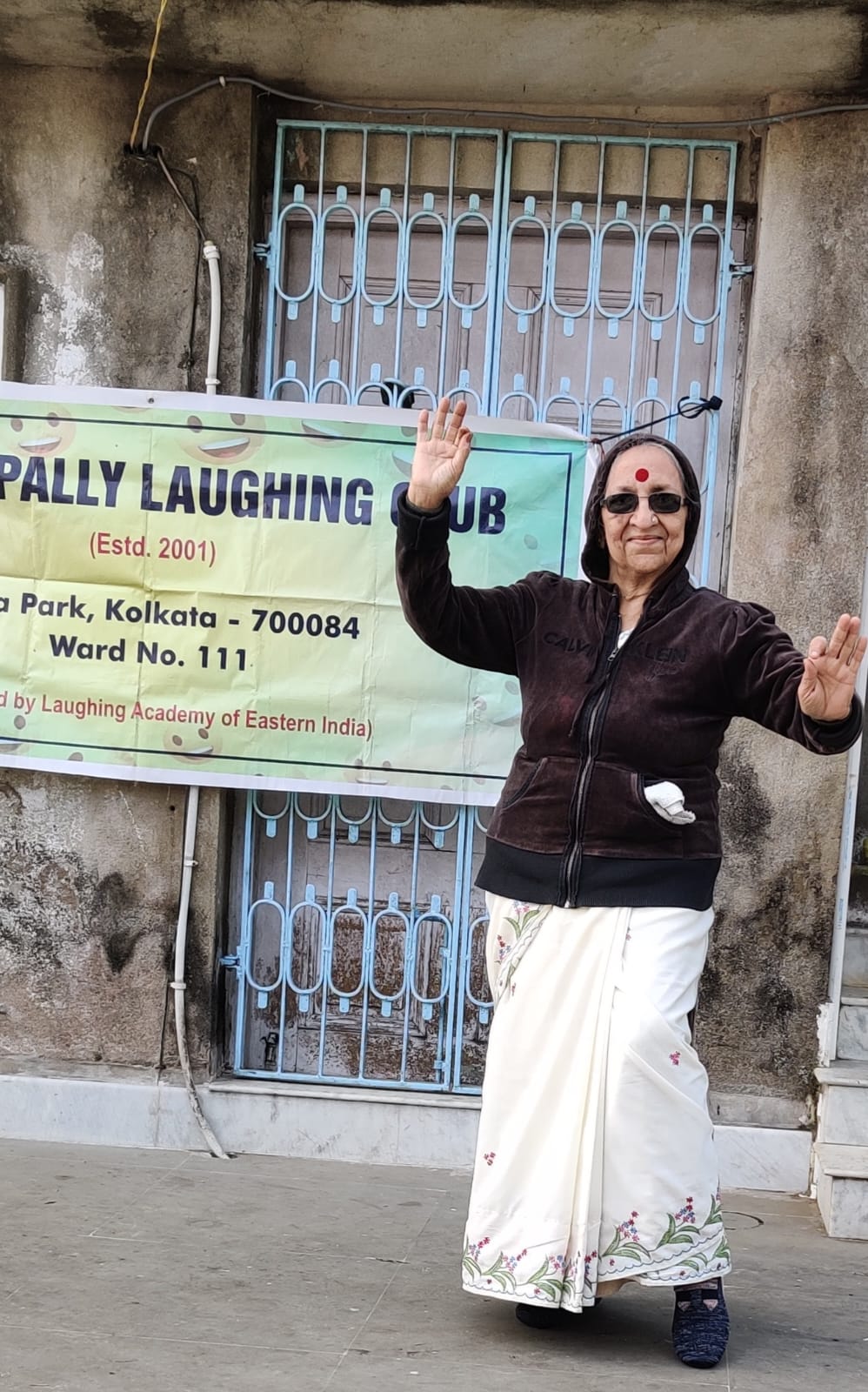
Beauty, I learn, is no longer skin-deep. Rather, it is quality conscious. In the process, what evolved is grit. That is why, when I met 78-year-old widow and a grand mother, Bulbul Bose, I was mesmerised by her spirit. A music teacher and kirtankar by profession, she loves to dance and can gyrate to all the Helen numbers for over an hour at a stretch!! 


                          Bulbul  Bose                                                            

I find their courage infectious, especially in today's time when the scope and depth of abusive behaviours have expanded. They may or may not always get the support of the company they work for. But, they no longer dither to walk that extra mile to earn their place with dignity. And it can be any city. With the celebration of 'Feminism' today, thanks to all the media paraphernalia and advertising blitzkrieg for an 'Equal Tomorrow', it is women like Sarika Halder, Bulbul Bose and Pratima K who take up the baton. Especially, when you see how they take on key challenges and grab emerging opportunities in a cut-throat market place, you know, women are no longer 'second sex'. In fact, today, notwithstanding  the patriarchal symbols in rituals and male gaze, women of any age show the zest to live life on their own terms. 


 Better still, they are no longer few in number and limited in certain brackets. They are ambitious, confident, gentle, cheerful and go-getter. They live by choice and shun compulsion. This is the India I am comfortable and proud about. 


Happy Women's Day!! 


 #EleanorRoosevelt #Feminism #CESC #BillyOcean #SudeshnaChatterjee #malegaze #Uber #EqualTomorrow


Saturday, 26 October 2024

The Weaver Bird


 The weaver bird built in our house ...

Remember the famous poem 'The Weaver Bird' by Kofi Awoonor that talks about both alienation and alignment. It explores the themes of imposition and the search for belonging in the wake of historical and cultural upheaval. 
                        

               Nest of a Baya Weaver 

We are just through the favourite Puja of the Bengalees, Durga pujo. Following Kojagari Lokkhi (Lakshmi) pujo, we are now preparing  for the upcoming Kali pujo. Not just among  Bengalees, but across India, Maa is worshipped in so many avatars; but in life, the abuse that a woman regularly and increasingly faces now across the nation sometimes make these celebrations look so shallow. How and why the perpetrators are getting bolder by the day are some of the other disturbing thoughts that cloud my vision as I feel good about Shreya Ghosal's reportedly performed protest song against this abuse at her recent concert in Kolkata, India. I feel sad but also hopeful on learning about muted observance at some mandaps in Kolkata to press for justice over the heinous RG Kar incident. 

Goddess Durga is the embodiment of female energy that encapsulates the power to both create and destroy.
As I pay ode to that creative energy, I thought of dedicating today's blog on our feathered friends rather than the humans for more reasons than one. A male bird who single-handedly and painstakingly creates beautiful and thoughtful nests. An enlightening example of male musing.

I may have seen and/or read about them earlier but somehow didn't get captivated by them till I saw one near the Bombay Natural History Society (BNHS) site within the lush foliage of Aarey colony, Mumbai, India. I am talking about the fascinating nests of the Baya Weaver birds. This was many years ago, 2014 to be precise. BNHS held a one-day workshop on environmental journalism. 

Over a decade later, I still get mesmerized by their nests. Recently, when my good friend and a noted nature photographer Suhasini Ahluwalia Mehta sent me a picture of the nest, I started writing this blog. From May to September is their breeding season. 

"The Baya Weaver Birds are widespread, social, gregarious birds nesting in colonies. They have a stout conical bill and short, square tail. The chatters interspersed with whistles is an easy way to detect the nesting sites of Baya weaver birds", informs freelance botanist Dr. Sweedle Cerejo-Shivkar, when I spoke to her while writing this blog. 

I was particularly hooked as much on learning upon their repeated efforts to create a home for their partners as was floored by the shape and space of their elaborate nest. It is said to be plastered with dung inside that works as a temperature controller. I had also heard about fireflies being used to light up their abodes.

The nest building activity starts in the monsoon when nesting material is abundant. "The grass and palm fronds are pulled apart into thin long fragments. Hundreds of trips are made back and forth from the plant material site to the ongoing nest building site.
The long nest is their signature and makes them popular. There are 2 parts of the nest – globular egg chamber and elongated tube at the lower side. The interiors of the egg chamber are plastered with mud and dung", observes Mumbai-based Cerejo-Shivkar, 40. 

After completing the upper globular part of the nest, the male makes the chatter and flutters their wings. This is an invitation for the female to inspect the nest. If liked, the nest is completed to bring in their babies.  

Usually a male Baya Weaver bird makes more than one nest (two or three at the most) in one breeding season. But a lot depends on the success of finding a mate, adds Cerejo-Shivkar.

Incidentally, the abandoned nests aren’t reused by the Baya Weavers, but yes Indian Silverbills do use them. Silverbills do build their nest of grasses but do not miss an opportunity to use abandoned nests of Baya Weavers. Why, you may wonder.
"Indian Silverbills use the same material as the Bayas. They are known to use the abandoned nest or rob/steal grass fragments from the Baya's nest", observes Cerejo-Shivkar.


Afterthought 

Some people have the habit of collecting nature's gifts like shells, corals, abandoned nests etc. as home decor. Is it advisable?
Not only abandoned nest, but anything built in nature with natural materials should be left untouched, since it will be reused or decomposed to become one with nature again, feels some nature enthusiasts. Some others would perhaps still pick up a shell or a pebble. When children gets excited over discovering a coral or an oyster shell and insists to take it as a keepsake, I feel it could nurture a bond with nature. But then...

Ideally, perhaps, it is better to bring only photographs back from nature that will treasure our memories for good. Nothing else. And ofcourse, do observe nature and teach your little ones too. There is so much to learn. 

      
   Nesting of Baya Weavers on Toddy Palms
     

#GoddessDurga#BNHS#BayaWeaver#IndianSilverbill#KofiAwoonor#SudeshnaChatterjee